
Three recent papers from the group
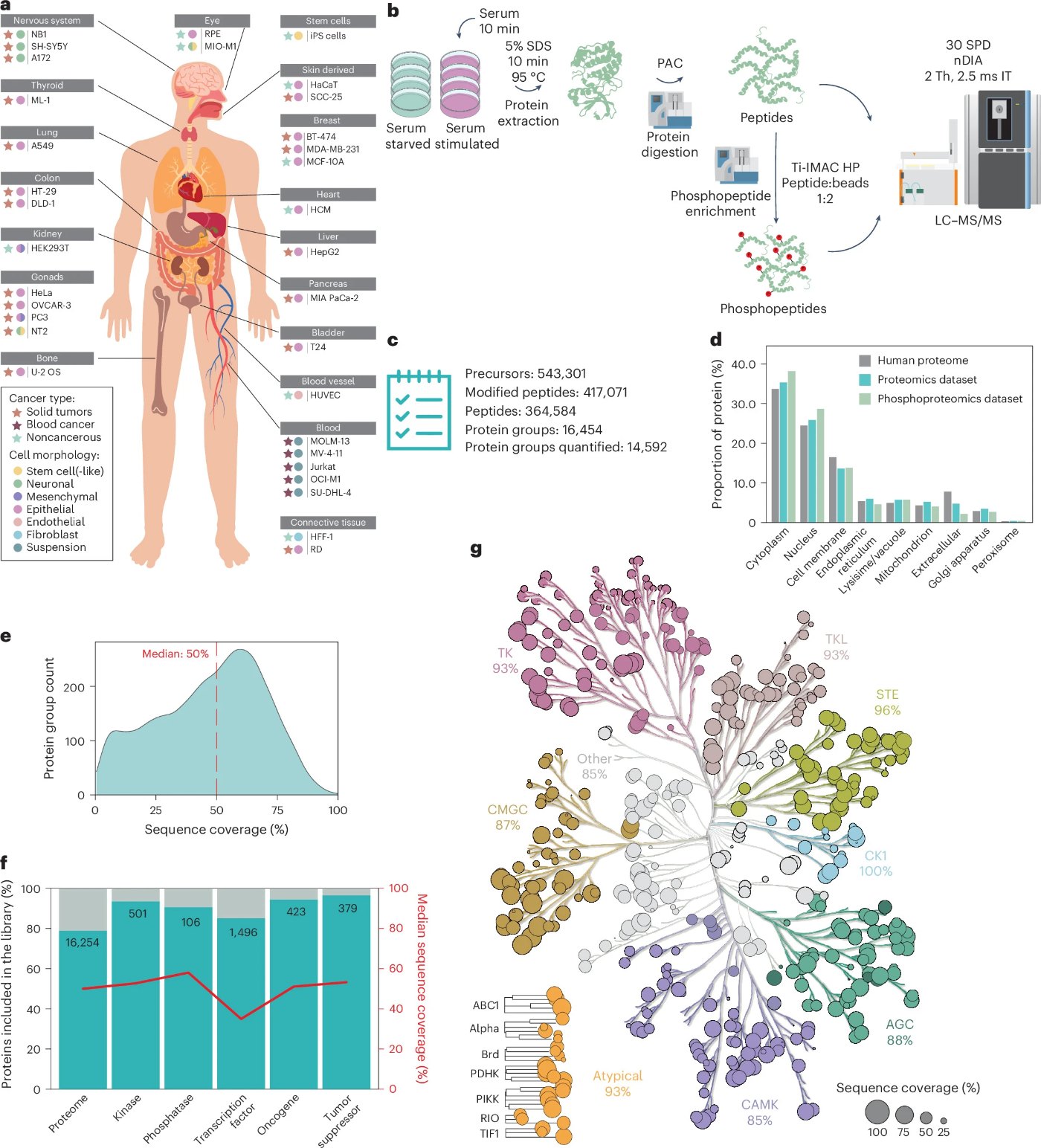
A phosphoproteome atlas of human cell lines reveals the landscape of kinase activity
An empirical resource of more than 200,000 class I phosphosites across 33 human cell lines. Used as a spectral library, it makes single-shot phosphoproteomics 30 times faster to process and improves phosphosite localization, even from minimal input. Combining proteome and phosphoproteome data into a kinase activity score (Cscore) reveals cell line and cancer-specific signalling vulnerabilities, many linked to drug sensitivity.
Read the paper →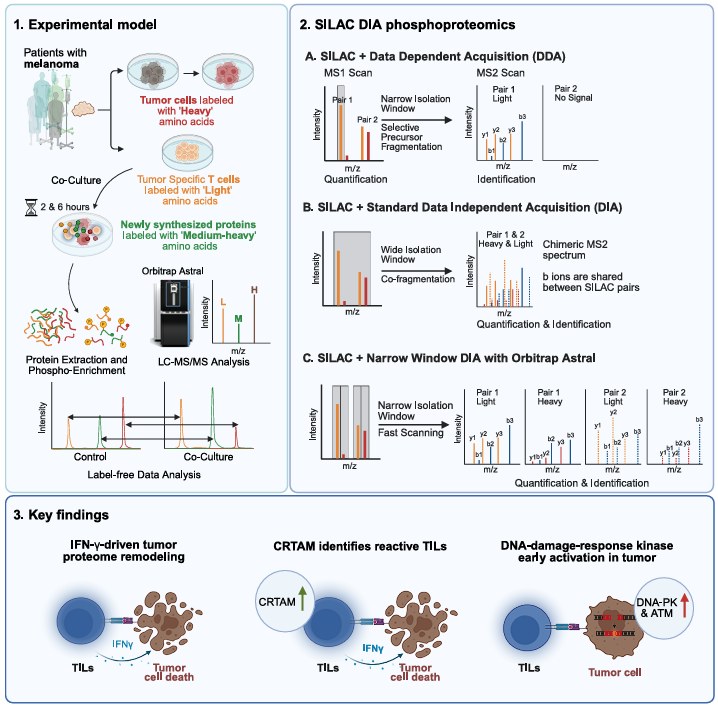
The proteomics and phosphoproteomics landscape of melanoma under T cell attack
Patient-derived melanoma cells are co-cultured with their own tumour-infiltrating lymphocytes, and SILAC labelling with Orbitrap Astral DIA tells the two proteomes apart without sorting the cells. This resolves cell type-specific phosphorylation during immune attack, identifies CRTAM as a marker of tumour-reactive T cells, and reveals rapid activation of DNA damage response kinases in the tumour cells.
Read the paper →Hybrid-DIA: intelligent data acquisition integrates targeted and discovery proteomics to analyze phospho-signaling in single spheroids
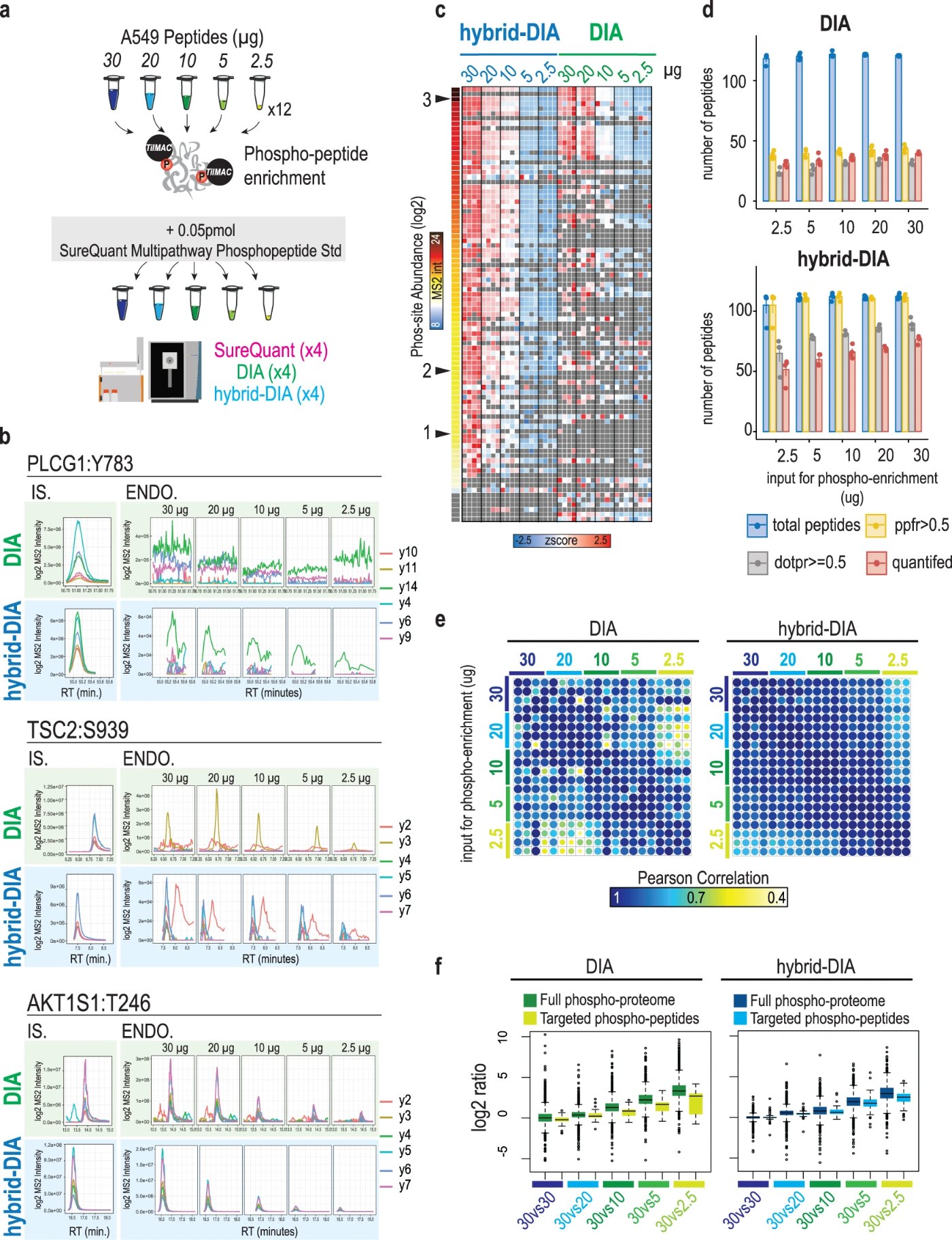
Hybrid-DIA combines targeted and discovery proteomics in a single run, using the instrument's API to insert targeted scans of predefined phosphopeptides between DIA scans. It matches the accuracy and sensitivity of SureQuant targeted methods across seven major signalling pathways while also profiling the global phosphoproteome, and was applied to drug responses in single colon cancer spheroids and to compare signalling in 2D and 3D culture.
Read the paper →